On the island of Jersey, maintaining a reliable drinking water supply presents unique challenges. The island relies heavily on surface water sources, with demand reaching up to 30,000 m³/d during peak summer periods. While additional supply can be provided by the island’s desalination plant, capable of producing 6,000 m³/d, this process comes with a significantly higher energy cost.
At the same time, agricultural practices on the island have historically resulted in elevated nitrate concentrations in certain surface water sources. In some cases, nitrate levels exceeded EU guideline limits, meaning these valuable water resources could not be used for potable supply.
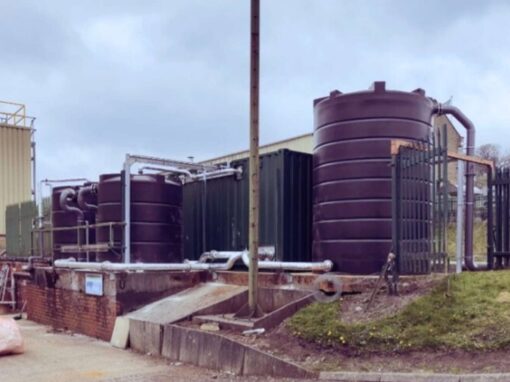
To address this challenge, an innovative treatment scheme was developed at Le Mourier Reservoir, enabling the treatment of nitrate-rich water and allowing it to be safely blended with other drinking water resources. The project was delivered for The Jersey New Waterworks Company, with Purac acting as the main contractor responsible for the overall treatment process.
Delivering a Specialist Reverse Osmosis Package
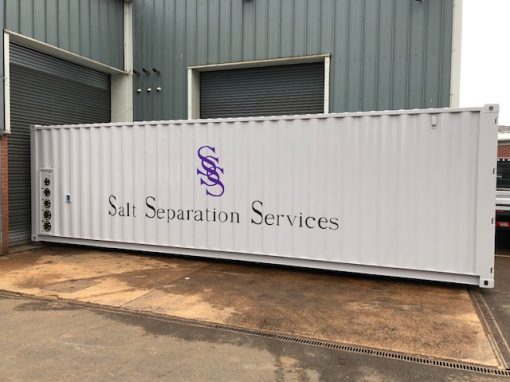
As part of the treatment solution, Purac required a high-performance Reverse Osmosis (RO) system capable of reducing nitrate levels following an initial ultrafiltration stage. Salt Separation Services was invited to tender for the design, manufacture and commissioning of a skid-mounted RO package, developed in line with Purac’s process design.
Following a competitive tender process, we were awarded the contract in April 2002. The system was successfully designed, manufactured, installed and commissioned between April and November 2002, integrating seamlessly into the existing treatment facilities at the Le Mourier site.
Flexible Duplex Reverse Osmosis Design
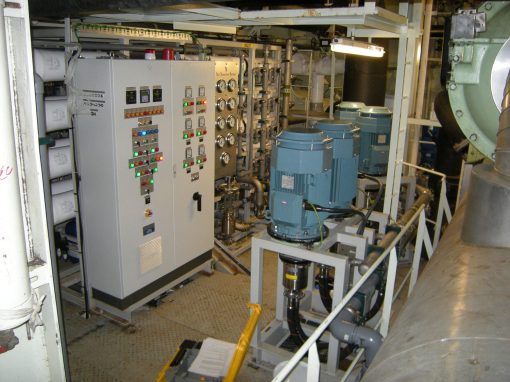
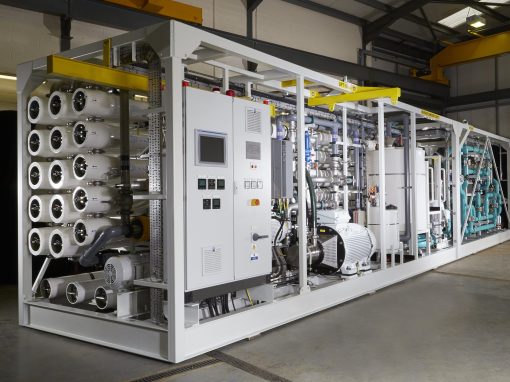
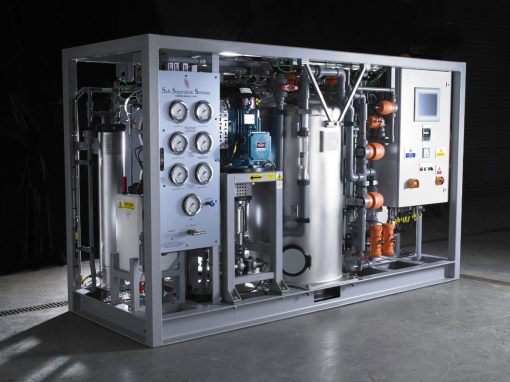
The solution delivered was a skid-mounted duplex reverse osmosis plant, designed to provide both operational flexibility and reliable performance.
The system consists of two identical brackish water RO treatment streams, each capable of producing 1,000 m³/d, giving a total system capacity of approximately 2,000 m³/d (2 × 42 m³/h). The duplex configuration allows the two streams to operate either independently or in parallel, ensuring continuous production and operational redundancy.
The RO plant uses low-energy thin-film composite (TFC) membrane elements, specifically selected to achieve efficient nitrate removal while minimising energy consumption. Fluid Systems RO membrane elements were used as these had DWI Regulation 31 approval at the time.
Operation of the system is fully automated, with plant performance controlled via a remote PLC system with an integrated Human Machine Interface (HMI). This interface provides operators with clear access to plant operating parameters, system status, and fault annunciation, ensuring safe and efficient operation at all times.
To ensure long-term durability and corrosion resistance, all process pipework was fabricated from 316L stainless steel, manufactured in-house by us.
Integrated Membrane Cleaning for Long-Term Performance
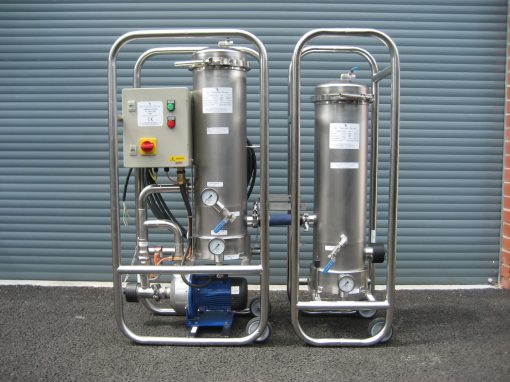
To support long-term membrane performance and simplify maintenance, we also supplied a skid-mounted membrane cleaning system designed for in-situ cleaning of the reverse osmosis elements.
The cleaning unit connects directly to the RO plant via flexible hoses attached to the high-pressure pipework manifolds. This allows operators to perform chemical cleaning without removing the membranes from the system.
The cleaning system includes:
- A hot water tank with immersion heater
- A dedicated cleaning tank with immersion heater
- A recirculating pump for effective distribution of cleaning solutions
- A cartridge filter installed within the cleaning return pipework
The system is capable of delivering cleaning solutions at flow rates ranging from 8 m³/h up to 40 m³/h, providing the flexibility needed for effective membrane maintenance.
Strengthening Jersey’s Water Resilience
By enabling the treatment of nitrate-impacted surface water, the Le Mourier Reservoir installation has helped unlock a previously underutilised water source for the island.
The treated water can now be blended with other supply sources, contributing up to 4,000 m³/d of potable water while reducing reliance on the island’s energy-intensive desalination plant.
Completed in November 2002, this project demonstrates how advanced membrane technologies, combined with robust system design and engineering expertise, can provide sustainable and cost-effective solutions to complex water treatment challenges.
Performance Characteristics
| Parameter | Design | Actual |
| Feed TDS Feed Nitrate Feed Temperature Feed Flow Permeate TDS Permeate Flow Permeate Nitrate | 426 mg/l 100 mg/l 7 to 16ºC 49.4 m³/h 14.1 mg/l 42 m³/h 6.7 mg/l | 400 mg/l 78 mg/ 10ºC 49.4 m³/h 7 mg/l 42 m³/h 3 mg/l |