Turning Treated Wastewater Into a Reusable Water Resource
As industries look for ways to reduce their reliance on fresh water, treating and reusing wastewater is becoming increasingly important. Rather than seeing treated wastewater as something to be discharged, advanced treatment technologies can allow it to be recovered and put back to work on site.
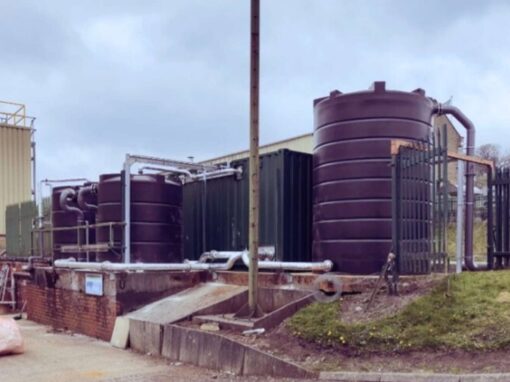
This was the challenge behind a project for an industrial customer looking to further treat water from an existing membrane bioreactor (MBR) system.
An MBR is a wastewater treatment process that combines biological treatment with membrane filtration. The biological stage uses microorganisms to break down organic matter in the wastewater, while the membranes separate treated water from remaining solids and microorganisms. The resulting water (known as MBR permeate) is much cleaner than the original wastewater but may still contain dissolved salts, minerals and other contaminants that need to be removed before it can be reused for certain applications.
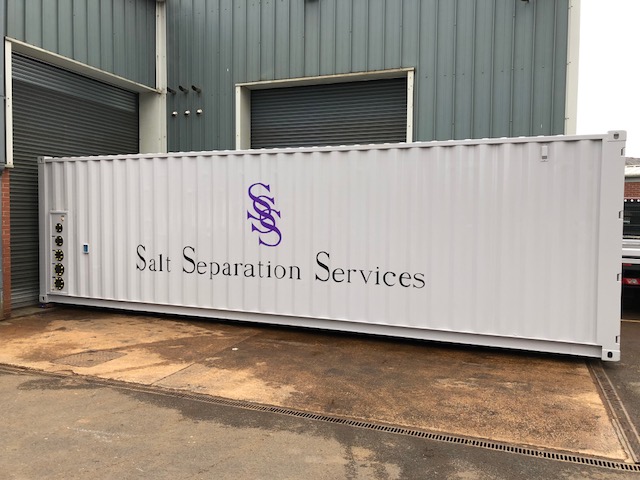
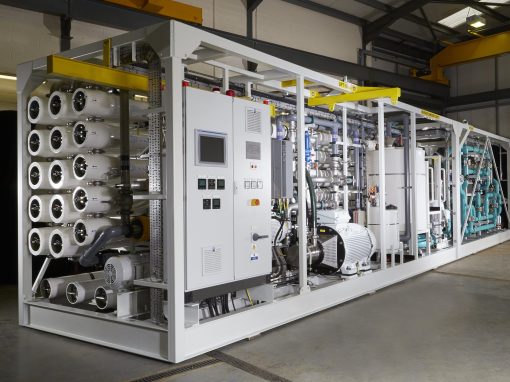
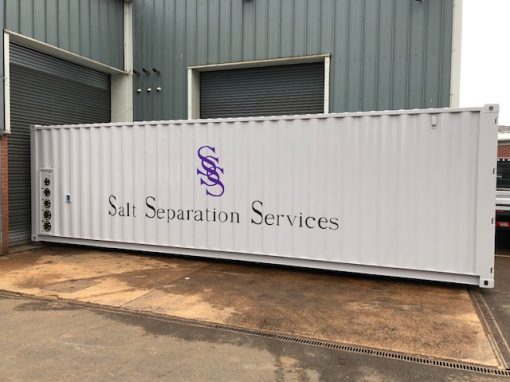
SaltSep was approached to design and manufacture a containerised RO plant capable of taking this MBR permeate and providing a further level of purification. The finished system needed to be compact, reliable and capable of operating as part of the customer’s existing water treatment process.
Designing an RO System Around MBR Permeate
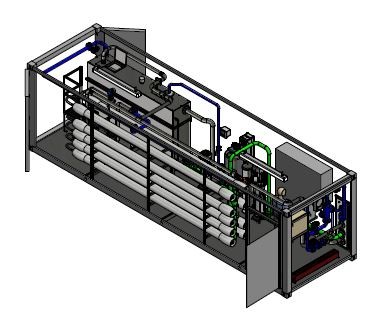
The requirement was for a 30ft containerised RO plant capable of treating 30 m³/h of MBR permeate at a recovery rate of 75%.
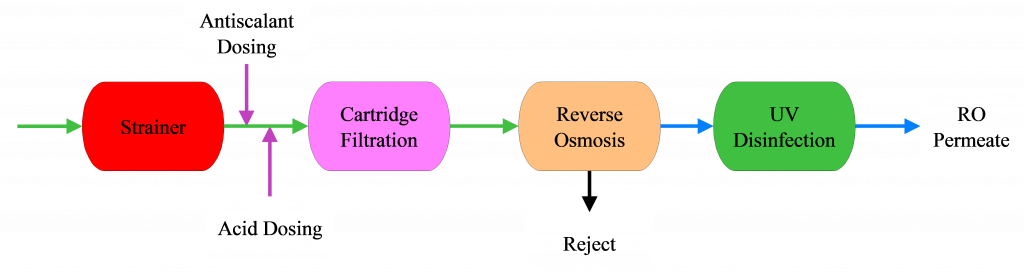
The recovered RO permeate would then pass through UV disinfection before being reused on site, helping the customer make better use of an existing water resource and reduce the demand for additional fresh water.
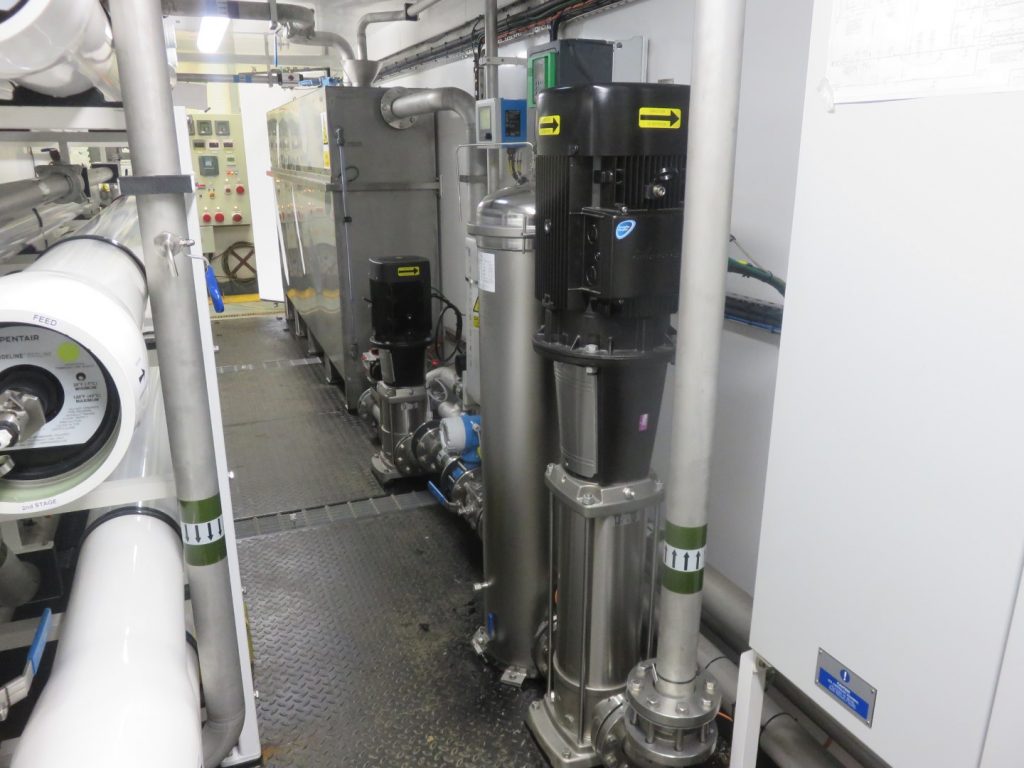
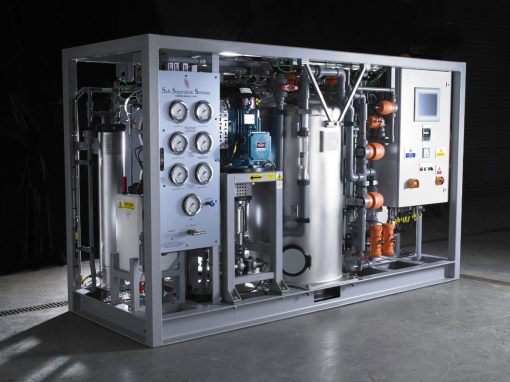
To achieve the required product water quality, SaltSep designed a three-stage reverse osmosis system incorporating 45 fouling-resistant membrane elements.
The system was designed to operate at 75% recovery, meaning that the majority of the incoming MBR permeate could be converted into usable treated water while minimising the volume of water sent to reject.
Solving an Unexpected Scaling Challenge
As with many bespoke water treatment projects, the design process did not end when the equipment was manufactured.
During trials of the containerised RO plant, the team encountered an unexpected challenge: the membrane elements in the third stage were experiencing rapid scaling.
The issue was linked to the chemistry of the MBR permeate. Under the operating conditions of the RO system, calcium phosphate could precipitate and form deposits on the membrane surfaces. If left uncontrolled, this scaling could affect membrane performance, increase cleaning requirements and ultimately reduce the efficiency of the plant.
The solution was to adapt the system to control the chemistry of the RO reject stream.
Acid dosing was incorporated into the MBR permeate treatment process to control the pH of the RO reject and help prevent calcium phosphate scale from depositing on the third-stage membrane elements.
This adjustment allowed the containerised RO plant to operate more reliably while maintaining the required treatment performance.
A Compact Solution for Water Reuse
The completed system provides a further stage of treatment for MBR permeate, producing high-quality RO permeate that can be disinfected using UV before being reused on site.
By combining MBR treatment with reverse osmosis and UV disinfection, the project demonstrates how different water treatment technologies can work together to turn treated wastewater into a valuable resource.
For SaltSep, the project was about more than simply designing a standard RO system. The chemistry of the incoming water, the required recovery rate, membrane performance and the practical constraints of a containerised system all had to be considered together.
The result was a bespoke containerised RO plant designed around the customer’s specific water reuse requirements – with the flexibility to adapt the system when real-world trials revealed a challenge that wasn’t immediately apparent on paper.